
The Russian proposal seen by the Economist offers Iran 5,000 short-range fiber-optic drones, an unspecified number of longer-range satellite-guided drones equipped with Starlink terminals, and training for Iranian personnel to operate both systems.
The reported Russian proposal
时政
(
twitter.com
)
The Russian proposal seen by the Economist offers Iran 5,000 short-range fiber-optic drones, an unspecified number of longer-range satellite-guided drones equipped with Starlink terminals, and training for Iranian personnel to operate both systems.
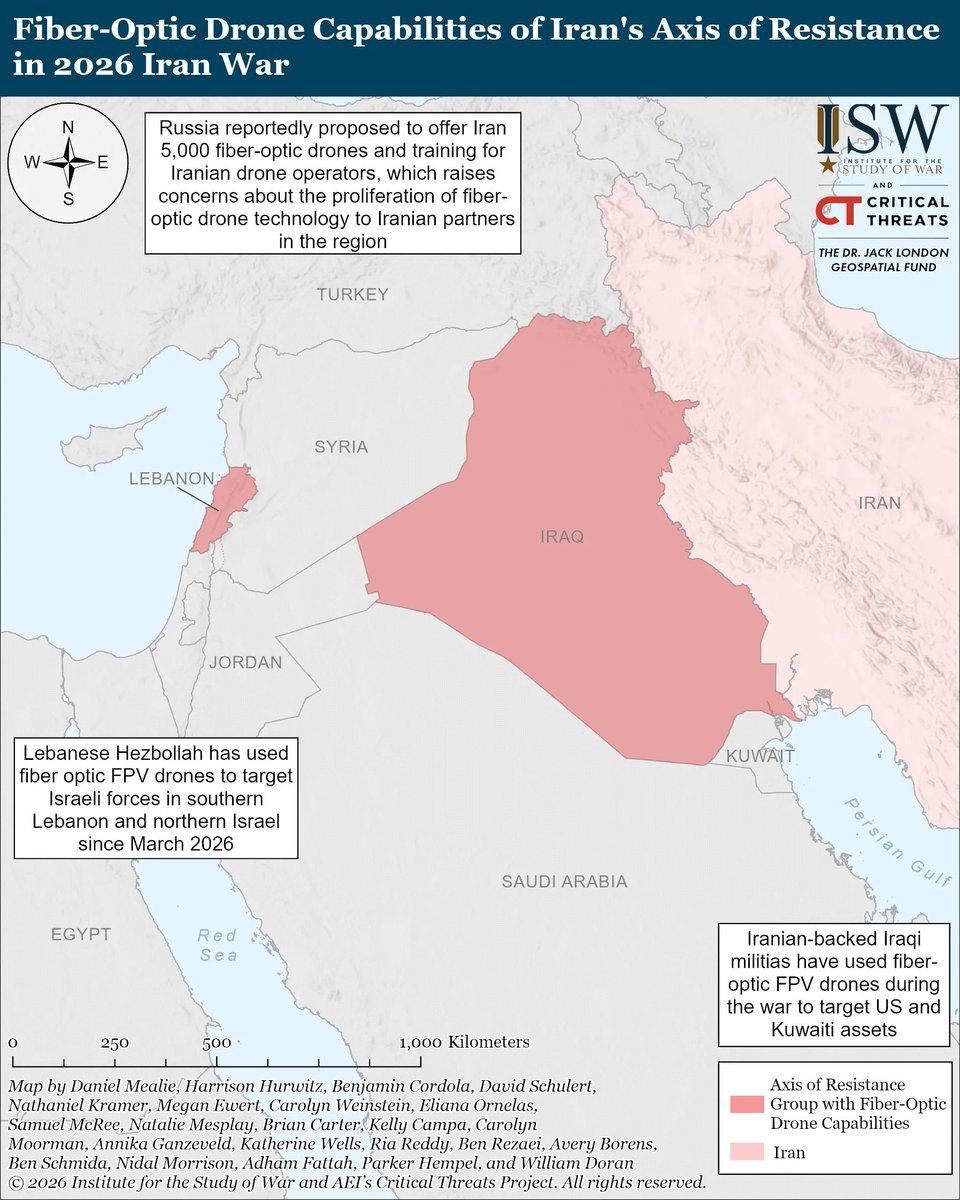
The reported Russian proposal further illustrates concerns about the proliferation of fiber-optic drones to Iranian proxy groups, some of which have already demonstrated the ability to employ these systems against US and allied targets.
Iranian-backed Iraqi militias and Lebanese Hezbollah have both used fiber-optic first-person view (FPV) drones during the current conflict. Likely Iranian-backed Iraqi militias conducted two fiber-optic drone attacks on Kuwaiti border posts in April 2026.
CTP-ISW previously assessed that Russia most likely transferred fiber-optic drone technology to Iran, which Iran then disseminated to Axis of Resistance groups, including Iraqi militias. Hezbollah has conducted several fiber-optic FPV drone attacks against Israeli forces and positions in northern Israel and southern Lebanon since March 2026.
Russia’s reported willingness to provide Iran with fiber-optic drones could accelerate the spread of such advanced drone technology across Iran’s regional proxy network and increase the threat that these groups pose to US and allied forces and interests.
点击图片查看原图

